Millions of Americans have prepared wills, named beneficiaries, and organized their financial records, but many have overlooked a critical question: What happens to their email accounts, online banking, digital photos, passwords, and other digital assets when they die? TheSeniorTechie founder Paul Wilczynski addresses that growing problem in his new book, “Who Gets Your Passwords? TheSeniorTechie Guide To Digital Estate Planning” (ISBN: 979-8995501725), now available on Amazon.
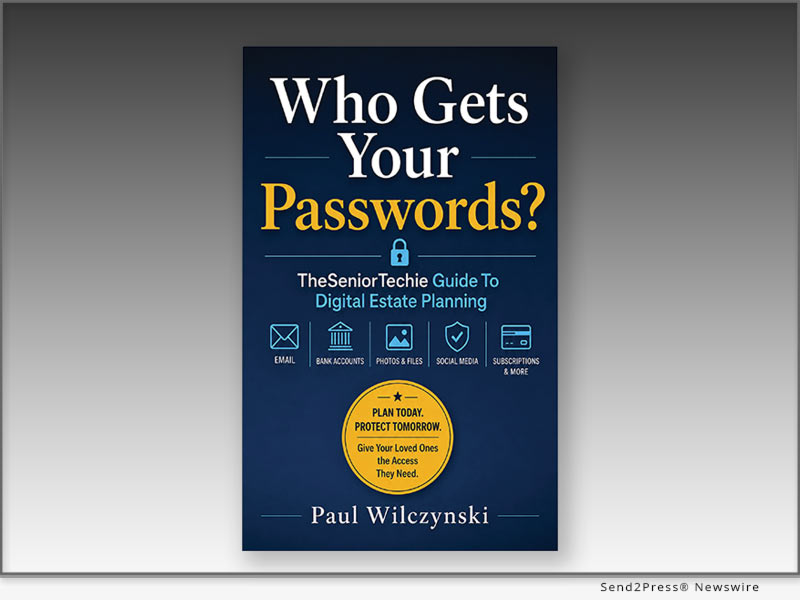
Millions of Americans have prepared wills, named beneficiaries, and organized their financial records, but many have overlooked a critical question: What happens to their email accounts, online banking, digital photos, passwords, and other digital assets when they die? TheSeniorTechie founder Paul Wilczynski addresses that growing problem in his new book, “Who Gets Your Passwords? TheSeniorTechie Guide To Digital Estate Planning” (ISBN: 979-8995501725), now available on Amazon.
As more of daily life moves online, family members are increasingly finding themselves unable to access important accounts, documents, photographs, and records after the death of a loved one.
“Many people have spent years preparing traditional estate documents,” said Wilczynski. “But they haven’t prepared their digital estate. Families often discover too late that they don’t know where important information is stored, what accounts exist, or how to access them.”
A digital estate includes far more than social media accounts. It can include email, online banking, cloud storage, digital photographs, smartphones, subscription services, shopping accounts, websites, loyalty programs, and other online assets accumulated over a lifetime.
The book is intended not only for individuals and families but also as a practical resource that can support conversations between clients and the professionals who help them prepare wills, trusts, and estate plans. Wilczynski believes digital estate planning should become a routine part of the broader estate planning process.
Written specifically for non-technical readers, the guide focuses on simple, practical steps for identifying digital assets, organizing account information, protecting privacy, preserving family memories, and creating clear instructions for loved ones.
“We spend a lifetime creating digital assets without thinking of them as assets,” said Wilczynski. “Taking a little time to organize that information today can save loved ones a great deal of frustration tomorrow.”
The issue affects people of all ages but may be particularly important for older adults who have accumulated decades of records, photographs, correspondence, and online accounts.
“At its heart, digital estate planning isn’t really about passwords,” Wilczynski said. “It’s about making life easier for the people you care about.”
“Who Gets Your Passwords? TheSeniorTechie Guide To Digital Estate Planning” is available in paperback and ebook formats through Amazon at https://www.amazon.com/dp/B0H7N336SQ.
ABOUT PAUL WILCZYNSKI
Paul Wilczynski is the publisher of TheSeniorTechie, a technology education platform dedicated to helping older adults use technology with confidence. He is the author of “Who Gets Your Passwords? TheSeniorTechie Guide To Digital Estate Planning” and “Don’t Move To Asheville: A Ruthlessly Honest Guide That Will Ruin Everywhere Else.” He lives in Asheville, North Carolina. Learn more at https://www.TheSeniorTechie.com/
Related link: https://www.TheSeniorTechie.com
Most older adults have planned their estates. Few have planned their digital estates.
This version of news story was published on and is Copr. © Advertising Industry Newswire™ (AdvertisingIndustryNewswire.com) - part of the Neotrope® News Network, USA - all rights reserved. Information is believed accurate but is not guaranteed. For questions about the above news, contact the company/org/person noted in the text and NOT this website.